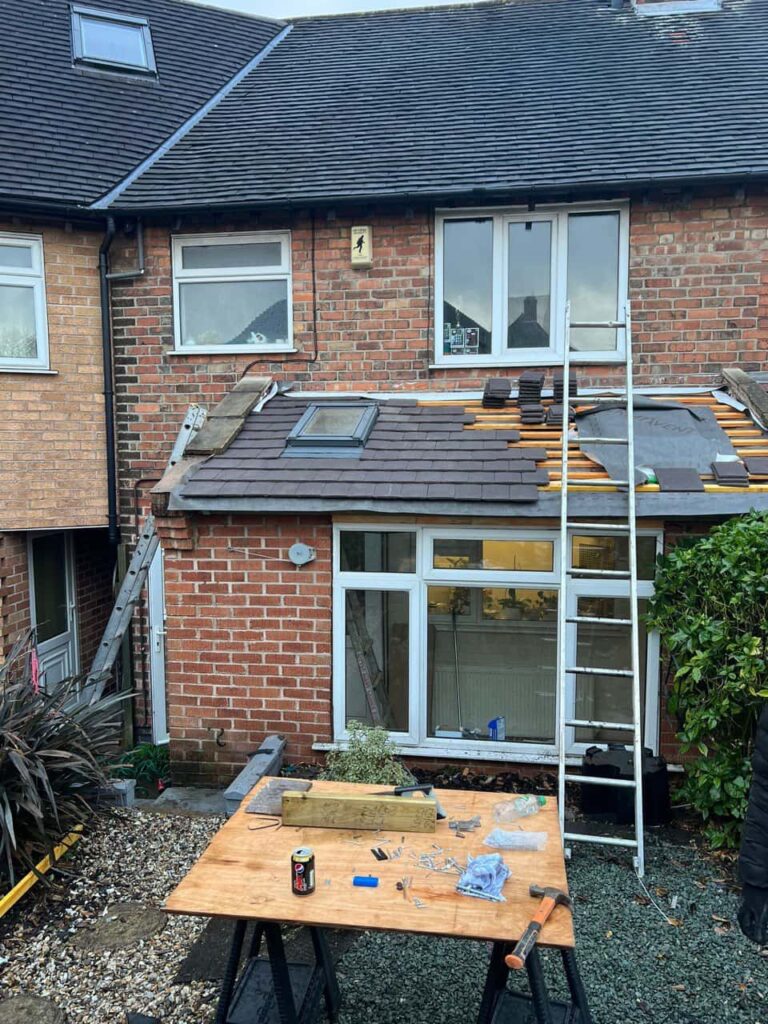
Damaged or displaced roof tiles do not always mean that extensive roofing work is required. When a defect is confined to a small area and the wider roof remains in sound condition, professional tile repairs can often restore its weather resistance with relatively limited disruption.
The success of a localised repair depends on accurate diagnosis. A broken tile may be the most visible sign, but the surrounding fixings, battens, underlay and adjoining tiles should also be checked. Addressing the complete defect helps prevent water ingress and reduces the likelihood of the same problem returning.
For property owners in Hessle, East Riding of Yorkshire, an early professional assessment can establish whether focused tile repairs are sufficient or whether deterioration extends further than it first appears.
When Can Roof Tiles Be Repaired Without Extensive Work?
Localised repairs are often possible when damage affects only a limited number of tiles and the underlying roof structure remains serviceable. The repair should still be planned carefully to avoid damaging sound materials around the affected area.
Replacing Cracked or Broken Tiles
A cracked tile may continue to shed some rainwater, but it no longer provides dependable protection. Water can enter through the damaged section and reach the underlay beneath.
Individual tiles can often be removed and replaced without disturbing large areas of the roof. The replacement should be compatible with the existing covering and positioned correctly so that it maintains the intended overlap with neighbouring tiles.
Simply sealing a crack may not provide a lasting repair, especially where the tile has split completely or begun to deteriorate around its fixing points.
Refitting Slipped Tiles
A tile can slip even if it is not visibly broken. Corroded fixings, damaged nibs, weakened battens or previous installation issues may allow it to move out of position.
Refitting the same tile may be possible if it remains sound, but the cause of the movement must be identified. If a failed fixing is ignored, the tile may slip again and leave the roof vulnerable.
The surrounding tiles should also be checked for movement, as one displaced unit can sometimes indicate a problem affecting a wider section.
Matching Replacement Tiles Carefully
A replacement tile must do more than look similar. Its profile, dimensions and interlocking design must suit the existing roof covering.
An unsuitable tile can create gaps, incorrect overlaps or uneven water flow. Even a minor difference may affect the way adjoining tiles sit. Careful matching helps the repaired area perform consistently and remain visually sympathetic to the rest of the roof.
Some variation in colour may remain because existing tiles naturally weather over time. However, choosing an appropriate type and finish can minimise an unnecessarily conspicuous repair.
Checking the Underlay and Battens
The visible tile is only one part of the roofing system. Beneath it, the underlay provides secondary protection, while the battens support the tile covering and hold its fixings.
If water has entered for some time, these materials may have deteriorated. Localised sections can sometimes be repaired alongside the tile covering, but their condition must be established first.
Replacing a tile above damaged support materials may conceal the issue without restoring the roof properly.
Inspecting the Surrounding Roof Area
Damage is not always limited to the first tile noticed from ground level. Adjacent tiles may be cracked, loose or poorly aligned, while nearby flashing or mortar could be contributing to water ingress.
A professional inspection should consider:
- The condition and position of neighbouring tiles
- Tile fixings and nibs
- Battens and underlay where accessible
- Ridges, hips and verges near the affected area
- Lead flashing and roof junctions
- Signs of moisture within the roof space
This wider assessment helps define the true extent of the required work.
How Localised Repairs Reduce Disruption
Where damage is limited, tile repairs can usually be focused on the relevant part of the roof. This means most of the existing covering can remain undisturbed.
The work may involve carefully lifting nearby tiles, renewing a small section of underlay or batten if necessary, fitting suitable replacements and reinstating the surrounding covering. This targeted approach avoids removing sound materials unnecessarily.
Access requirements and the location of the defect will influence how the work is completed. A straightforward repair near an accessible roof edge may differ from work around a chimney, valley or high roof slope. Nevertheless, localised repairs are generally less intrusive than replacing an entire roof covering.
When More Extensive Work May Be Necessary
Tile repairs are not appropriate in every situation. Broader work may be needed when damage is widespread, battens have deteriorated across a large area or the underlay is no longer performing effectively.
Warning signs can include:
- Tiles slipping repeatedly in different areas
- Numerous cracked or delaminating tiles
- Widespread fixing failure
- Sagging or uneven sections
- Several unrelated leaks
- Significant deterioration beneath the covering
In these circumstances, repeatedly replacing individual tiles may address visible symptoms without resolving the overall problem. A professional assessment can determine whether local repairs remain practical.
Why Timely Tile Repairs Matter
A small opening in the roof covering can allow wind-driven rain to reach the materials below. Continued exposure may affect underlay, insulation, timbers and internal finishes.
Prompt attention can help keep the work confined to the original area. It also provides an opportunity to correct loose fixings or nearby defects before they develop into more substantial problems.
TRP Roofing Hessle can inspect damaged tiled roofs in Hessle, East Riding of Yorkshire, identify the cause and explain whether a focused repair is suitable. This allows work to be based on the roof’s actual condition rather than assumptions made from its external appearance.
Conclusion
Professional tile repairs can often restore a roof without major disruption when the damage is localised and the supporting components remain sound. Correct tile matching, secure fixing and careful inspection of the underlay, battens and neighbouring materials are essential to a dependable result.
If you have noticed broken, cracked or slipped tiles at your property in Hessle, East Riding of Yorkshire, contact TRP Roofing Hessle to arrange a professional assessment and determine the most appropriate repair.
Call us on: 01482 420 492
Click here to find out more about TRP Roofing Hessle
Click here to complete our contact form and see how we can help with your roofing needs.